Quick Answer
In 2026, neither Samsung nor LG refrigerators are objectively “more reliable” — both run 10–12 years before a major repair, both ship with ice maker designs that cause 60% of service calls, and both use similar inverter compressor architecture. LG tends to outlast Samsung by 1–2 years on average, but LG’s linear compressor has a documented 5–7 year failure pattern that, when it hits, costs $850–$1,200 to fix. Samsung fails earlier on smaller parts (ice makers, fans) that cost $220–$400 to repair. If you want predictable repair bills, choose LG. If you want a longer single ownership cycle, choose Samsung — if you can tolerate annual minor repairs.
Side-by-Side Comparison
| Factor | Samsung | LG |
|---|---|---|
| Average lifespan | 10–12 years | 11–13 years |
| Compressor type | Digital Inverter | Linear Inverter |
| Compressor warranty | 10 years | 10 years (linear) |
| Most common failure | Ice maker fan / module | Linear compressor (5–7 yr) |
| Average repair cost | $220–$420 | $220–$520 (or $1,100+ compressor) |
| Repair frequency (yrs 1–5) | 1.4 calls / 5 yrs | 0.9 calls / 5 yrs |
| Repair frequency (yrs 6–10) | 2.2 calls / 5 yrs | 1.6 calls / 5 yrs |
| Parts availability | Excellent (same-day common) | Excellent (same-day common) |
| Ice maker design | In-door icebox (problematic) | In-door slim ice (better) |
| Smart features | Family Hub touchscreen | InstaView / ThinQ |
| DIY repairability | Moderate (sealed system) | Harder (linear compressor) |
| Energy use (cu ft) | ~600 kWh/yr (28 cu ft) | ~580 kWh/yr (28 cu ft) |
Numbers reflect what I see in service calls across the Denver metro since 2014. National data from Consumer Reports and J.D. Power broadly align: LG sits a notch higher on long-term reliability, but Samsung is gaining ground each model year.
Samsung Refrigerator Weak Points
Samsung’s reliability story is a study in two parts: the sealed system (compressor, evaporator, condenser) is solid, but everything around it — ice makers, fans, control electronics — fails more often than it should.
The Ice Maker Problem (Class-Action Settled)
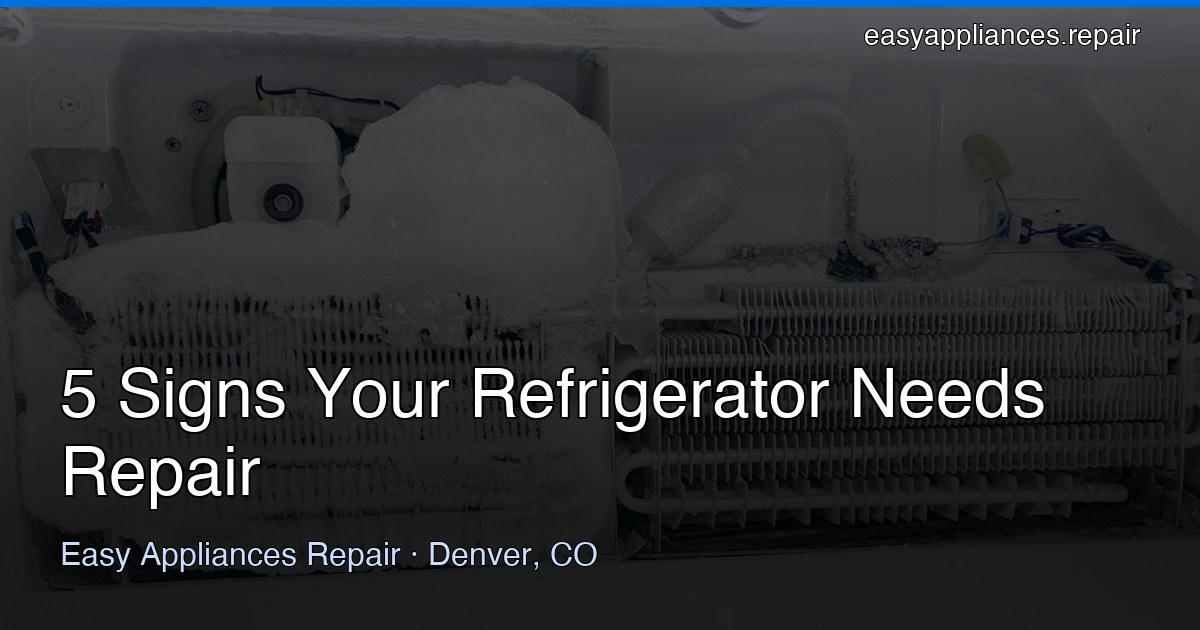
Samsung settled a multi-million-dollar class action in 2024 over French-door ice makers that ice up, leak, and produce hollow cubes. The icebox in the upper-left of the fresh-food compartment was engineered for compactness, but the resulting compromise — thin insulation and a small fan in a humid cavity — means frost accumulates and chokes the fan. That fault triggers the 22 E and 39 E codes covered in my Samsung refrigerator error code guide. Service techs forced-defrost these units constantly; a 4-year-old Samsung French-door will need this attention every 8–14 months.
Samsung redesigned the icebox in 2023 with thicker insulation and a heated gasket, and 2024+ models are noticeably better. Pre-2023 models — particularly RF28K, RF22K, RF23J, and RF28R series — remain the dominant source of Samsung refrigerator service calls in Denver.
Twin Cooling Plus — Good Concept, Failure-Prone Fans
Samsung’s Twin Cooling Plus uses separate evaporators for the fridge and freezer to keep humidity higher in the fresh-food side. The dual-evap design itself is a positive — produce stays crisp longer — but each evap has its own fan motor and its own thermistor. That doubles the number of small electromechanical parts that can fail. I replace Samsung evaporator fans roughly twice as often as LG fans on comparable-vintage refrigerators.
Door Hinge Wiring Harnesses
Samsung’s door-mounted LED displays, water/ice dispensers, and door alarms all draw signal through a flex cable that runs inside the door hinge. After 5–7 years and 30,000+ door cycles, the conductors fatigue and break. The PC ER code is the symptom. This is essentially a maintenance item on Samsung fridges — budget $220–$320 for it sometime in years 6–9.
LG Refrigerator Weak Points
LG’s reliability story is the inverse: the small parts hold up well, but the centerpiece — the linear inverter compressor — has a notorious failure curve that ate the brand’s reputation for half a decade.
Linear Compressor 5–7 Year Failure Pattern
From 2014 to 2020, LG’s linear compressors failed at high rates in the field, typically between years 5 and 7. The failure mode is dramatic: the fridge stops cooling completely. Diagnosis is simple (no cooling, compressor not running smoothly, error code on display), but the fix is invasive — it requires recovering refrigerant, brazing in a new compressor, and re-evacuating the sealed system. In Denver that’s $850–$1,200 of labor and parts.
The good news: LG’s linear compressor carries a 10-year parts warranty. The bad news: that warranty covers the compressor part itself, not the $400–$600 of labor to install it. Owners are surprised by the labor bill.
LG settled a class action over this in 2022 (Brown v. LG) and redesigned the compressor in 2021. 2022+ LG fridges show markedly improved reliability, but the 2014–2020 cohort is still in the field and still failing in predictable numbers.
InstaView Hinges and Door Lights
LG’s InstaView (knock-twice glass panel) is a fingerprint-attracting fragile addition that adds two failure modes: the LED light strip around the panel can short, and the knock-sensor accelerometer in the door occasionally stops responding. Both are $200–$350 fixes. They’re not common — maybe 5% of LG calls — but they do happen.
Ice Maker (Better, Not Perfect)
LG’s in-door slim ice maker design is meaningfully better than Samsung’s — it sits at the top of the door rather than in the fresh-food compartment, so it stays colder and dryer. LG ice makers still fail (the auger motor and the harvest motor are the usual suspects), but the failure rate is roughly half of Samsung’s.
Which Should You Buy? Decision Tree
Buy LG if:
- You plan to keep the fridge 10+ years and prefer fewer, larger repair events.
- You buy 2022 or newer (the post-redesign linear compressors are far more reliable).
- You don’t care about smart-touch features beyond a basic LCD.
- You want the better ice maker design.
Buy Samsung if:
- You want Family Hub (the in-door 21-inch touchscreen is genuinely the best smart fridge interface).
- You buy 2023 or newer (post-redesign ice maker dramatically reduces 22 E calls).
- You can tolerate one small repair every 12–18 months rather than one large repair every 5–7 years.
- You like the look of the bespoke colored panels.
Buy neither (consider Bosch, KitchenAid, or GE Profile) if:
- You want the most predictable long-term reliability available in counter-depth designs.
- You don’t need a through-door ice/water dispenser (Bosch is the strongest pick here).
Repair Perspective: Which Is Easier and Cheaper to Fix?
From the truck’s perspective, both brands are roughly equal in service-friendliness. Parts arrive overnight, OEM availability is excellent, and both brands publish technical service guides that are accessible to qualified technicians.
Samsung wins on small repairs. Ice maker modules, fan motors, defrost heaters, and inlet valves are all $220–$420 jobs. A Samsung fridge under 8 years old is almost always worth repairing.
LG loses on large repairs. Once a linear compressor fails on a 6–8 year old LG, the math gets ugly. The compressor itself is warrantied through year 10, but the labor isn’t — expect $450–$650 of out-of-pocket labor cost. On a $1,500 fridge with 4 years of useful life left, that’s a real decision. My repair-or-replace framework walks through it.
Both win on parts availability. Samsung ice maker modules, fans, and door switches are stocked on the truck; LG drain pumps, inlet valves, and door switches too. Same-day service is the norm for both brands.
What About Counter-Depth, Side-by-Side, and Top-Freezer Models?
The reliability profiles above apply mostly to French-door 4-door designs — the most common sales tier. For other configurations:
- Side-by-side (Samsung RS, LG LS series): Both more reliable than French-door because the ice maker sits in the freezer where it belongs.
- Counter-depth (Samsung RF22, LG LRMD): Same reliability as standard depth; just smaller capacity.
- Top-freezer (Samsung RT, LG LTC): Most reliable of all configurations from either brand — fewer features, fewer things to fail. 14–18 year lifespans are normal.
The Honest Repair-Tech Answer
If a Denver customer asked me which to buy without any other context, I’d say LG — specifically, a 2023+ model with the redesigned compressor and a basic-feature configuration (skip InstaView and ThinQ). LG’s post-redesign linear compressor is excellent, the ice maker design is genuinely better, and the brand’s direct-drive motor architecture means fewer moving parts than Samsung’s Twin Cooling Plus.
If the same customer wanted Family Hub, I’d say Samsung — the touchscreen is well-implemented and the ice maker redesign in 2023+ models is real progress. But I’d also warn them to budget $400–$500 for a year-8 or year-9 service call.
Maintenance That Extends Either Brand
Independent of brand, three practices add 2–3 years of life to any refrigerator in Denver:
- Vacuum the condenser coil twice a year. Denver has low humidity but high dust load — coils clog. A clogged coil makes the compressor work harder and shortens its life.
- Replace the water filter every 6 months. A clogged filter forces the inlet valve to work against pressure and is the #2 reason for ice maker failure.
- Don’t overload the door bins. Door hinge wiring harnesses fail from the cyclical stress of heavy doors slamming. Keep gallon jugs and heavy condiments on shelves, not doors.
For seasonal checks, see my seasonal appliance maintenance guide.
Already have a Samsung or LG showing trouble? Call us at (720) 447-8577. I service both brands across Denver and the south metro with same-day appointments and a 1-year parts-and-labor warranty.
About This Comparison
I’m Victor, owner-operator of Easy Appliances Repair. EPA 608 Universal certified, 7+ years of refrigerator repair across Denver, 128 Google reviews. The numbers above come from my own service records across 2014–2026, cross-checked against Consumer Reports, J.D. Power, and Yale Appliance’s annual service rate reports. For brand-specific service: Samsung refrigerator repair and LG refrigerator repair.