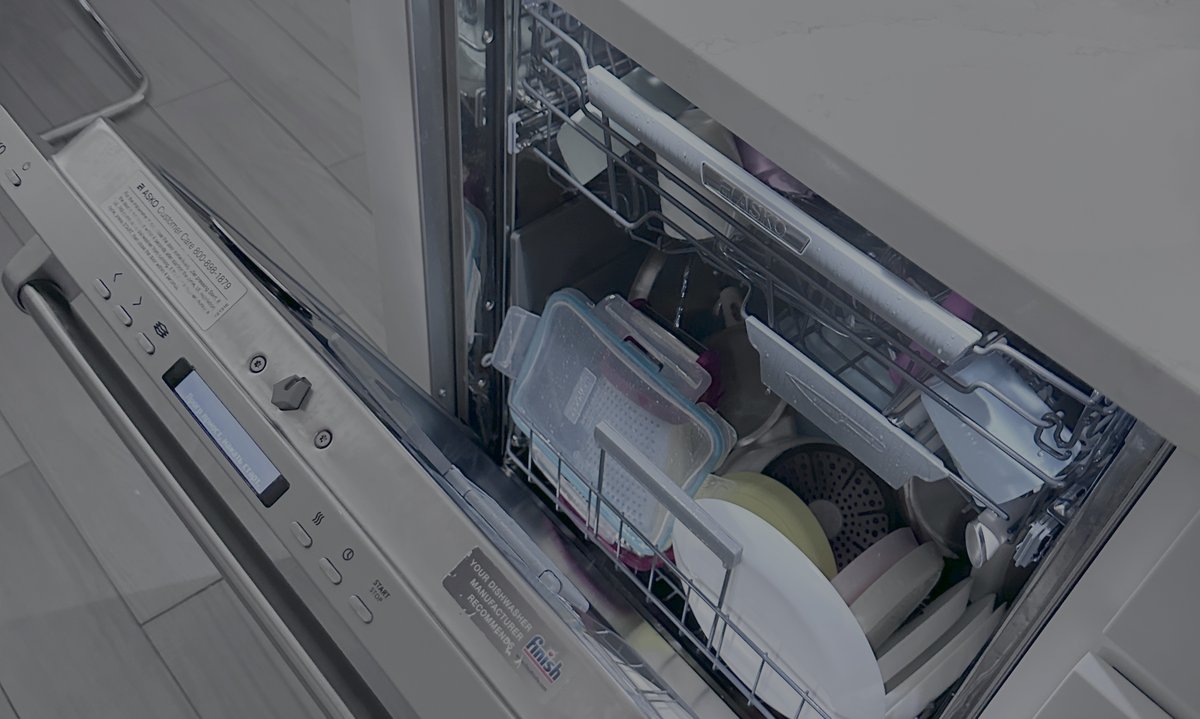
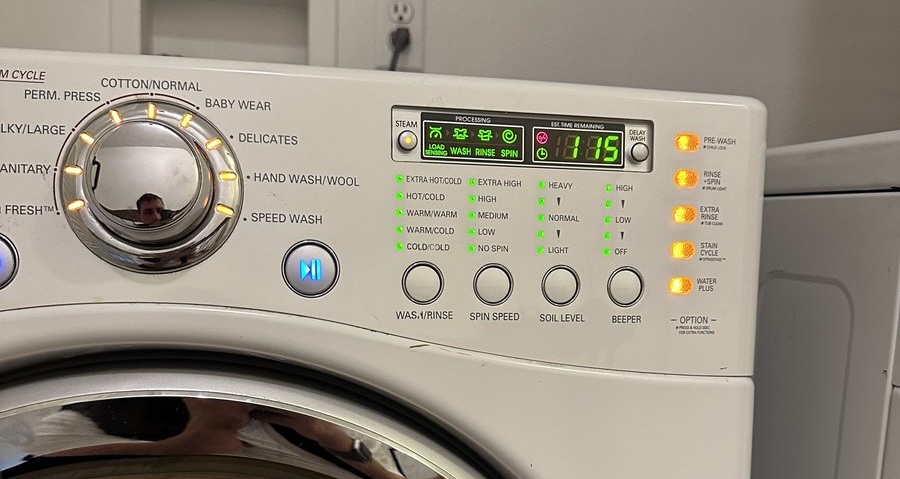
Hard water is the quietest appliance killer in the Denver metro. It does not trip a breaker or throw an error code. It works slowly, mineral layer by mineral layer, until a heating element burns out, a spray arm stops spraying, or an ice maker stops filling. By the time a homeowner calls me, the appliance has usually been declining for a year or more — and the same water is already at work on every other water-using appliance in the house.
After ten-plus years repairing appliances across Denver, Highlands Ranch, Littleton, Castle Rock, and the surrounding suburbs, I can predict the failure order with surprising accuracy. This article walks through exactly what hard water breaks first, what each failure costs you, and whether spending money on a water softener actually pays off here.
How Hard Is Denver’s Water, Really?
Denver Water, the utility serving most of the city, publishes a water quality report each year. The short version: most of the Denver service area tests in the range of 100 to 200 ppm of calcium carbonate, which the standard scale classifies as moderately hard. You can see the current numbers in the Denver Water quality report.
That number is not uniform across the metro. Castle Rock and parts of Highlands Ranch run noticeably harder — often 200 to 300 ppm, which is firmly in the “hard” category. Those communities draw on different source water, and the difference shows up in how fast appliances scale. If you live in Castle Rock and your neighbor in central Denver swears their dishwasher lasts forever, this is part of the reason.
Here is the key point: “moderately hard” sounds harmless. It is not. Moderately hard water still deposits enough calcium and magnesium scale to shorten appliance life measurably. It is just slow enough that most people never connect the dots.
What Breaks First: The Failure Order
| Component | How Hard Water Kills It | Typical Repair Cost |
|---|---|---|
| Coffee maker | Scale clogs the heating tube; slows then stops | Usually replaced ($30–$200) |
| Dishwasher heating element | Scale insulation, overheats, burns out | $150–$300 |
| Dishwasher spray arm jets | Mineral plugs the small nozzle holes | $80–$200 (or DIY clean) |
| Ice maker fill tube & supply line | Scale narrows the passage; slow or no fill | $120–$350 |
| Washing machine heating element | Scale insulation, overheats, fails early | $180–$350 |
| Water heater element / tank | Sediment buildup, lost efficiency, shorter life | $200–$600+ |
1. The Coffee Maker — Your Early-Warning System
The coffee maker almost always shows symptoms first, and there is a good engineering reason. It heats water in a tiny aluminum tube with essentially zero tolerance for scale. There is no thermostat margin, no oversized element, no slack in the design. So when your drip coffee maker starts brewing slowly, sputtering, or stopping mid-cycle, treat it as a diagnostic signal: scale is also accumulating in your dishwasher, your washer, and your water heater — those just have more room to absorb it before they fail.
2. Heating Elements — What Actually Fails First in Major Appliances
Here is the single most important thing to understand about hard water and appliances. A heating element — in a dishwasher, a washing machine with an internal heater, or a water heater — is designed to transfer heat directly into the water around it. When calcium scale crusts onto that element, it acts as insulation. The element can no longer dump its heat into the water efficiently, so the heat builds up inside the element itself.
An element running hotter than designed does not last as long. In my experience across Denver hard-water homes, a scaled element fails roughly two to three times faster than it would on softened water. An element that should give you 12 to 15 years instead gives you 5 to 7. The element does not look dramatic when it fails — it just stops heating — but the cause was years of mineral insulation. To understand the part itself, see our glossary entry on the heating element.
3. Ice Maker Fill Tube and Supply Lines
Ice makers depend on a thin fill tube and narrow supply lines to deliver a precise small amount of water on each cycle. Scale narrows those passages a little at a time. First the ice cubes get smaller and hollow. Then cycles take longer. Eventually the fill tube clogs or the inlet valve cannot push water through, and ice production stops. The water inlet valve and the ice maker module both take a beating from hard water — the valve seat and solenoid wear out faster fighting the restriction.
4. Dishwasher Spray Arm Jets
Your dishwasher’s spray arms have dozens of small holes that aim pressurized water at your dishes. Those holes are exactly the right size for calcium to bridge and plug. When jets clog, the wash pattern breaks down, and you get film, grit, and poorly cleaned dishes — often misdiagnosed as a pump or detergent problem. If your dishes have stopped coming clean, our guide on a dishwasher that is not cleaning walks through the full diagnostic order, with clogged spray jets near the top of the list.
The Real Cost of Doing Nothing
Let me put a number on this, because “hard water shortens appliance life” is too vague to act on. Over a typical 10-year ownership period, hard water in Denver realistically costs you $200 to $500 per appliance in premature element and component replacements — and that is just the parts and labor I see on service calls. It does not count the lost efficiency you pay for in higher utility bills the whole time, and it does not count appliances that get scrapped early because a scale-driven repair was not worth the cost on an aging machine.
Run that across a dishwasher, a washing machine, a water heater, and a refrigerator ice maker, and a Denver household can easily spend $1,000 to $2,000 over a decade on damage that is, fundamentally, a water-quality problem.
Your Options, From Cheapest to Most Complete
Option 1: Regular Descaling (Cheapest)
Running a citric acid or white vinegar descaling cycle through your dishwasher and coffee maker every month removes loose scale before it bonds permanently. This costs almost nothing and genuinely slows the damage. It will not strip a heavily coated element or unclog a fully blocked inlet valve, but consistent descaling is the highest-value free habit you have.
Option 2: Point-of-Use Inline Filter (Targeted)
For the refrigerator specifically, a point-of-use inline filter on the water supply line runs about $40, with a replacement cartridge every six months. It protects the ice maker and water dispenser — the appliance components most sensitive to scale — without the cost of treating your whole house. For many Denver homes in the 100 to 150 ppm range, this is the sweet spot of cost versus benefit.
Option 3: Whole-House Water Softener (Most Complete)
A whole-house softener removes calcium and magnesium before water reaches any fixture. Installed cost in the Denver metro typically runs $1,500 to $3,500, plus roughly $20 a month in salt. This is the only solution that protects every appliance, your plumbing, and your water heater all at once. If you are in Castle Rock or harder parts of Highlands Ranch at 200-plus ppm, a softener usually pays for itself in extended appliance life and fewer repair calls. In central Denver at 100 to 150 ppm, the payback is slower and point-of-use filtration may be enough.
Already seeing the symptoms — weak ice, filmy dishes, an element that quit? I diagnose scale-related failures every week across Denver metro and tell you honestly whether to repair, replace, or treat the water. The $75 service fee is waived when you book the repair, and every job carries a one-year warranty.
Should You Repair or Replace a Scale-Damaged Appliance?
The rule of thumb on a hard-water failure is straightforward. If the appliance is under eight years old and the failed part is a single element or valve, repair it — and then address the water so it does not happen again. If the appliance is ten-plus years old and you are looking at a scaled element plus a clogged inlet valve plus a tired pump, that is the water telling you the machine has reached the end of its useful life. I will give you that read honestly on the call rather than selling you a repair that will not last. Our dishwasher repair and washing machine repair pages cover what each service includes.
Frequently Asked Questions
How hard is Denver’s water?
Denver Water generally tests in the 100 to 200 ppm range for calcium carbonate, which is classified as moderately hard. Castle Rock and parts of Highlands Ranch run higher, often 200 to 300 ppm, which is firmly in the hard category.
What appliance does hard water break first?
Heating elements fail first. Scale builds an insulating crust on the element in dishwashers, washing machines, and water heaters, which makes the element run hotter and burn out two to three times faster than it should. Coffee makers usually show symptoms earliest.
Is a whole-house water softener worth it in Denver?
For most Denver-metro homes a softener costs $1,500 to $3,500 installed plus roughly $20 a month in salt. If you run hard water at 200-plus ppm, like much of Castle Rock, it usually pays back in extended appliance life and fewer repairs. At 100 to 150 ppm the math is closer and point-of-use filtration may be enough.
Why does my coffee maker fail before other appliances?
A coffee maker heats water in a tiny aluminum tube with no scale tolerance built in. It is essentially an early-warning system. When the coffee maker slows down or stops, that is your signal that scale is also accumulating in your dishwasher, washer, and water heater.
Can I clean scale out of my appliances myself?
Yes, partly. Running a citric acid or white vinegar descaling cycle in the dishwasher and coffee maker every month removes loose scale. It will not reverse a scale-coated heating element or a clogged inlet valve, but regular descaling slows the damage considerably.
Call Victor — Denver Appliance Repair
Hard water damage is predictable, which means it is also manageable. Descale regularly, protect your refrigerator with an inline filter, and weigh a softener seriously if you live in a hard-water pocket like Castle Rock. When a scaled element or clogged valve does finally give out, I handle the repair across Denver, Highlands Ranch, Littleton, Centennial, Lone Tree, Englewood, Aurora, Parker, and Castle Rock. Call (720) 447-8577 or book online.