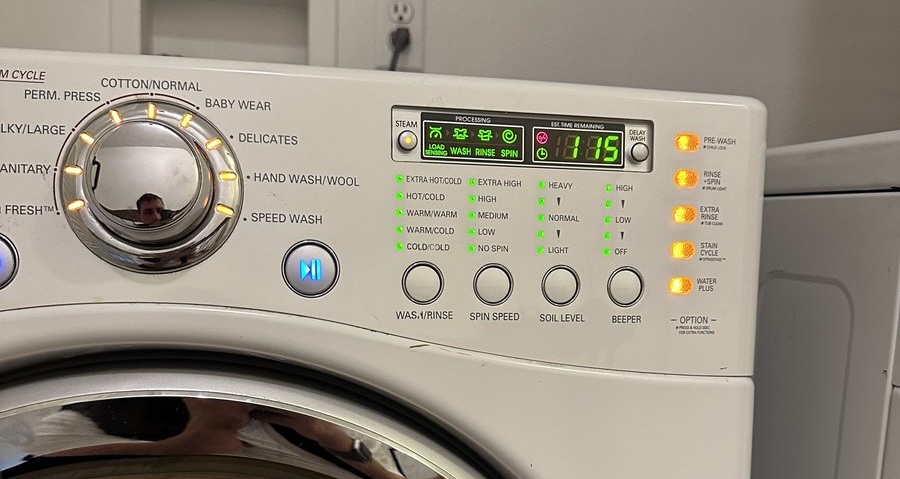
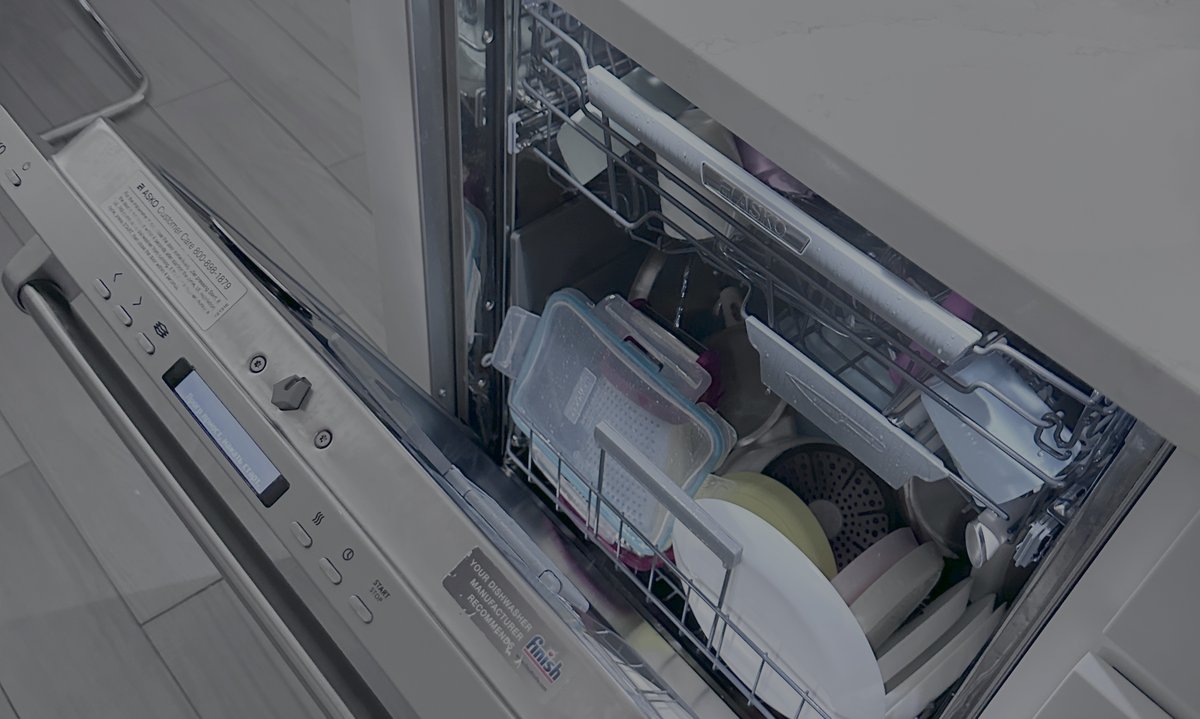
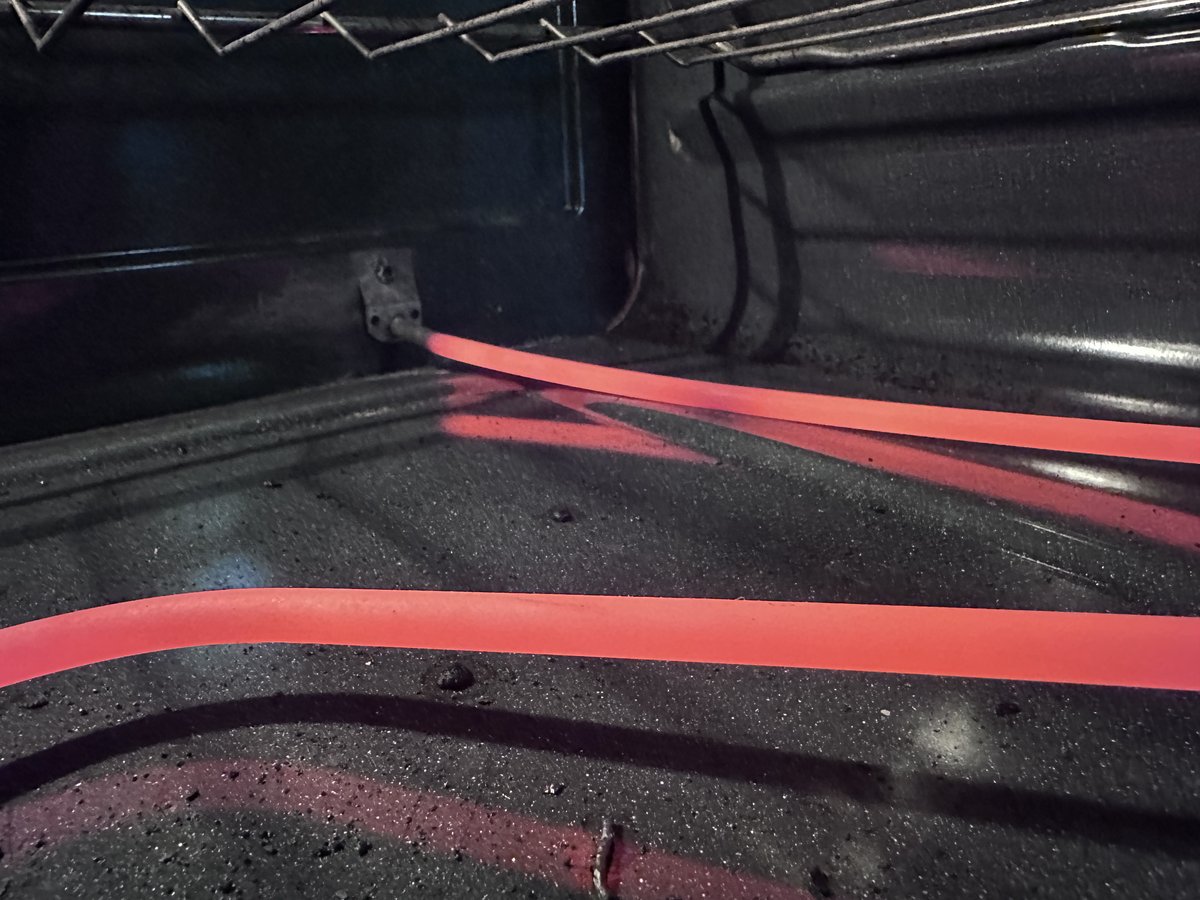
Every week a customer asks me the same question on the phone: “Is it even worth fixing, or should I just buy a new one?” It’s the right question — but most people answer it with only half the math. They compare the repair quote to the sticker price of a new appliance and stop there. The sticker price is not the real cost of replacing. Once you add delivery, installation, haul-away, and hookup, replacing costs $230–$630 more than the price tag. This guide gives you the full math: the 50% rule, the hidden costs of replacing, a lifecycle tier table, and per-appliance decision tables you can use today.
Quick Decision Reference (2026)
| Situation | Decision | Why |
|---|---|---|
| Repair under 50% of new, unit under design-life age | Repair | Repair wins the 50% rule with years of life left |
| Repair over 50% of new, standard brand, 10+ years old | Replace | Fails the rule; next failure likely close behind |
| Any premium / built-in brand (Sub-Zero, Wolf, Viking, Miele, Thermador) | Repair | 20–25+ yr life; replacement costs many thousands |
| Repair quote $150–$300, any age, standard brand | Repair | Below the hidden cost of replacing alone |
| Compressor or sealed-system failure, fridge 8+ years old | Usually replace | $500–$900 repair on a unit near end of life |
| Second major repair within 12 months, standard brand | Replace | Pattern of failure signals the unit is worn out |
The 50% Rule, Explained
The 50% rule is the backbone of every repair-or-replace decision: if a repair costs more than 50% of the price of a comparable new appliance, replace it; if it costs less, repair it. It’s simple, it’s fast, and it gets the right answer most of the time — but only if you use it correctly. Two things trip people up.
First, the rule compares the repair to a comparable new appliance, not the cheapest one on the floor. If you own a mid-range French-door refrigerator, the comparison is a mid-range French-door refrigerator — not a $600 basic top-freezer. Comparing your repair to a downgrade makes replacement look better than it is.
Second, the rule is most accurate when you layer in age. A repair at 45% of new is an easy “repair” on a 4-year-old unit and a much harder call on a 13-year-old one, because the older unit has fewer years left to amortize the repair over. I use the rule like this:
- Repair cost under 30% of new: Repair, almost regardless of age.
- Repair cost 30–50% of new: Repair if the unit is within its design-life tier; weigh carefully if it’s past it.
- Repair cost over 50% of new: Replace, unless it’s a premium or built-in brand.
The Hidden Costs of Replacing
Here is where most repair-or-replace math goes wrong. The price on the appliance is not what it costs to put a working appliance in your home. In the Denver metro, replacing a major appliance carries these additional costs in 2026:
| Hidden cost | Typical range | Notes |
|---|---|---|
| Delivery | $50–$150 | “Free delivery” often excludes stairs, tight access, or scheduling windows |
| Professional installation | $100–$250 | Higher for built-in, panel-ready, or gas units |
| Haul-away of old unit | $30–$80 | Refrigerant-bearing units may cost more to dispose of |
| Water / gas hookup | $50–$150 | New water line, gas connector, or 240V cord/kit as required by code |
| Total extra beyond sticker price | $230–$630 | Added on top of every new-appliance purchase |
That $230–$630 changes the math. A $700 refrigerator isn’t a $700 decision — it’s a $930–$1,330 decision. When you run the 50% rule, run it against the delivered, installed cost, not the price tag. A $450 repair that looked like 64% of a $700 sticker price is actually 34–48% of the true replacement cost. That can flip the decision entirely.
There are softer costs too: the day you take off work for delivery, the learning curve on new controls, and the reality that a brand-new appliance has its own break-in failure rate in the first year. None of those show up on an invoice, but they all favor a sound repair on a unit you already know.
Appliance Lifecycle Tiers
How long an appliance is designed to last is the other half of the decision. Repairing a unit with 10 good years ahead is very different from repairing one with two. Appliances fall into three lifecycle tiers:
| Tier | Brands | Design life | Repair posture |
|---|---|---|---|
| Standard | Whirlpool, Samsung, LG, GE, Maytag, Frigidaire | 10–13 yrs | Apply the 50% rule strictly; replace past year 10 for $400+ repairs |
| Premium | Bosch, Miele, Speed Queen, KitchenAid built-ins | 15–20 yrs | Repair freely through year 12–15; parts stay available longer |
| Built-in luxury | Sub-Zero, Wolf, Viking | 20–25+ yrs | Repair at virtually any age; replacement runs many thousands |
The tier matters more than any single repair quote. A $600 repair on a 14-year-old Sub-Zero is a clear yes — that unit has a decade left and a like-for-like replacement is $8,000–$15,000 plus install. The same $600 repair on a 14-year-old standard-brand refrigerator is a clear no — it’s past its design life and a delivered replacement is $1,000–$1,600.
Per-Appliance Decision Tables
Below is the math broken down by appliance. “New (delivered)” figures include the $230–$630 hidden costs. The repair-ceiling column is the point where I’d steer a standard-brand customer toward replacement.
Refrigerator
| Factor | Detail |
|---|---|
| Typical repairs | Defrost system $200–$350, evaporator/condenser fan $180–$300, control board $250–$450, compressor/sealed system $500–$900 |
| New (delivered) | $1,000–$1,900 standard; $4,000–$15,000 built-in luxury |
| Repair ceiling (standard) | ~$500; replace past year 10 for a compressor or sealed-system failure |
| Verdict | Repair fans, boards, defrost parts. Replace for compressor failure on a 10+ yr standard unit; always repair Sub-Zero. |
Washing Machine
| Factor | Detail |
|---|---|
| Typical repairs | Drain pump $180–$280, control board $200–$420, door boot $220–$350, drum bearing $350–$550 |
| New (delivered) | $830–$1,400 standard; $1,400–$2,200 premium/Speed Queen |
| Repair ceiling (standard) | ~$400; bearing job on a 9+ yr standard machine tips to replace |
| Verdict | Repair pumps, valves, boots. See the full washer repair cost guide. Always repair Speed Queen and Miele. |
Dryer
| Factor | Detail |
|---|---|
| Typical repairs | Heating element $150–$280, thermal fuse/thermostat $120–$200, drum roller/belt $130–$260, control board $200–$400 |
| New (delivered) | $780–$1,400 standard |
| Repair ceiling (standard) | ~$400; dryers are mechanically simple and very repair-friendly |
| Verdict | Repair almost always — dryers routinely run 14+ years with cheap, common parts. See the dryer repair cost guide. |
Dishwasher
| Factor | Detail |
|---|---|
| Typical repairs | Drain pump $180–$280, circulation pump $250–$420, control board $200–$420, door latch $180–$280 |
| New (delivered) | $730–$1,400 standard; $980–$2,000 Bosch; $1,400–$3,100 Miele |
| Repair ceiling (standard) | ~$350; Bosch ~$500; Miele repair almost any failure |
| Verdict | Repair pumps and valves; weigh boards on 12+ yr standard units. See the dishwasher repair cost guide. |
Oven & Range
| Factor | Detail |
|---|---|
| Typical repairs | Heating element $150–$280, igniter $180–$280, control board $250–$500, safety valve $250–$400 |
| New (delivered) | $930–$2,000 standard; $2,000–$4,100 dual-fuel; $6,000–$15,000 premium |
| Repair ceiling (standard) | ~$450; premium ranges repair at any age |
| Verdict | Repair elements and igniters freely. See the oven & range repair cost guide. Always repair Wolf, Viking, Thermador. |
Microwave
| Factor | Detail |
|---|---|
| Typical repairs | Magnetron $150–$280, door switch $120–$190, control board $180–$320, diode/capacitor $120–$200 |
| New (delivered) | $130–$400 countertop; $530–$1,000 over-the-range / built-in |
| Repair ceiling (standard) | Countertop: replace, not repair. Over-the-range/built-in: repair up to ~$300 |
| Verdict | Replace a countertop unit — repair rarely beats a $150 new one. Repair over-the-range and built-in microwaves where replacement is costly. |
When Repair ALWAYS Makes Sense
There is one category where you almost never need the 50% rule at all: premium and true built-in appliances. Sub-Zero, Wolf, Viking, Miele, and Thermador should be repaired in virtually every case. Here’s why:
- The units are engineered for 20–25+ years. A 15-year-old Sub-Zero is middle-aged, not old. The repair buys you a decade, not two years.
- Parts stay available for decades. These manufacturers support their appliances long after standard brands have discontinued parts. Miele guarantees parts for 20 years from manufacture.
- Replacement is brutally expensive. A built-in Sub-Zero is $8,000–$15,000 before install. A Wolf range is $6,000–$12,000. A $700 repair against a $10,000 replacement isn’t a decision — it’s arithmetic.
- Built-in units carry install costs that dwarf the hidden-cost table above. Swapping a built-in column refrigerator or a flush wall oven can mean cabinetry and panel work running into the thousands.
If you own one of these brands and a technician suggests replacement for anything short of a catastrophic, multi-system failure, get a second opinion.
When Replacement Makes Sense
Replacement is the right call in a narrower set of cases than most people think:
- A standard-brand unit, 10+ years old, facing a $400+ repair. This is the classic replace case — past design life, fails the 50% rule, and the next failure is statistically close behind.
- A compressor or sealed-system failure on a refrigerator 8+ years old. At $500–$900, this repair rarely pays back on a standard fridge near the end of its tier.
- A second major repair within 12 months. One failure is bad luck; two in a year is a pattern. The unit is telling you it’s worn out.
- A countertop microwave with any internal failure. A new one is $130–$250 — below the cost of most repairs.
- An appliance you already dislike. If the unit is loud, inefficient, or too small and a repair only gets you back to “tolerable,” replacement may be worth it even when the math is close.
How to Get an Honest Answer
The cleanest way to make this decision is a proper diagnostic. Call (720) 447-8577 with brand, model number, age, and symptoms. I’ll quote a tight repair range over the phone, and once I’ve confirmed the failure on site I’ll tell you plainly whether repair or replacement is the better value — using the same math in this article. If I think you should replace, I’ll say so, and you only pay the $75 diagnostic. That happens on a small share of calls, and customers consistently tell me they’d rather hear it straight.
The $75 diagnostic fee is waived when you book the repair, and every repair carries a 1-year parts-and-labor warranty.
Not sure whether to repair or replace? Call (720) 447-8577 with brand, model, age, and symptoms. I’ll run the real cost math with you and give you a straight answer. $75 diagnostic, waived with repair. 1-year warranty on parts and labor.
Frequently Asked Questions
What is the 50 percent rule for appliance repair?
The 50% rule says that if a repair costs more than 50% of the price of a comparable new appliance, you should replace it. If the repair is under 50%, repair it. The rule works best when you also factor in the appliance’s age and the hidden costs of replacing, which add $230–$630 beyond the sticker price.
What are the hidden costs of replacing an appliance?
Beyond the sticker price, replacing an appliance in Denver typically adds $230–$630: delivery $50–$150, professional installation $100–$250, haul-away of the old unit $30–$80, and water or gas hookup $50–$150. These costs make the repair side of the 50% rule stronger than the sticker price alone suggests.
When should you always repair an appliance instead of replacing it?
Always repair built-in and premium appliances: Sub-Zero, Wolf, Viking, Miele, and Thermador. These units are engineered for 20–25+ year service lives, the manufacturers keep parts available for decades, and replacement runs many thousands of dollars. Even a $700 repair is a fraction of replacement cost on these brands.
When does replacing an appliance make more sense than repairing?
Replace when a standard-brand appliance is 10 or more years old and faces a repair of $400 or more, especially a control board or compressor. At that point the unit is near the end of its design life, the repair exceeds the 50% rule, and the next failure is likely close behind.
How long do home appliances last in 2026?
Standard-brand appliances last 10–13 years on average. Premium brands such as Bosch, Speed Queen, and KitchenAid built-ins last 15–20 years. True built-in luxury units from Sub-Zero, Wolf, and Viking last 20–25+ years. Maintenance, water hardness, and usage all shift these figures.
About Easy Appliances Repair
I’m Victor, owner-operator. EPA 608 Universal certified, 7+ years repairing residential appliances across Denver and the south metro, with a 4.9-star rating across 128 reviews. I give every customer the straight repair-or-replace answer using the math in this article — and back every repair with a 1-year parts-and-labor warranty. Coverage area: Denver, Highlands Ranch, Littleton, Centennial, Aurora, Parker, Castle Rock, and the rest of the south metro.