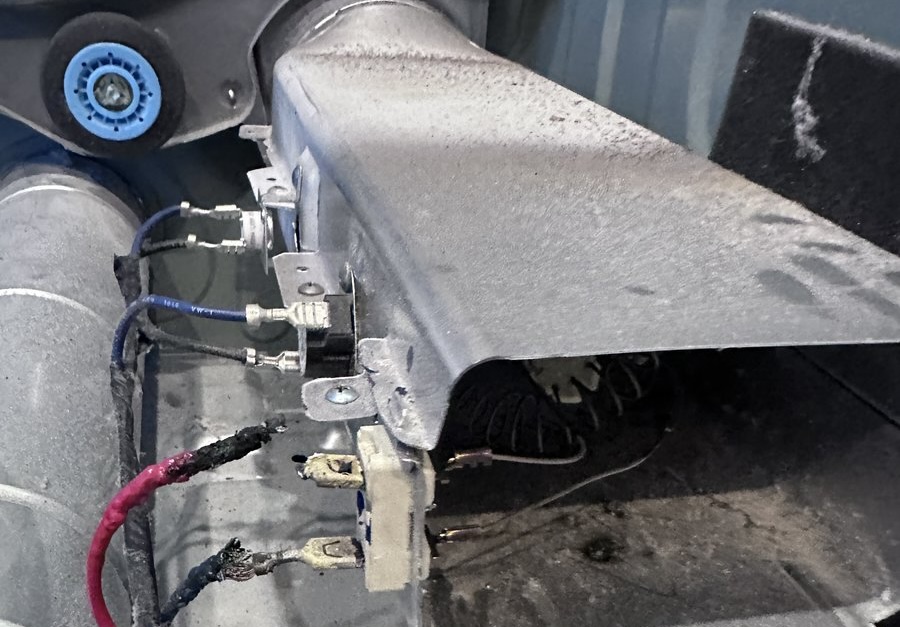
A clogged dryer vent is the most dangerous problem in the average laundry room, and it is also one of the easiest to fix yourself. According to the National Fire Protection Association, clothes dryers are involved in roughly 2,900 home fires every year, causing about $35 million in property damage and dozens of injuries. The single most common contributing factor — cited in about 92% of cases — is restricted airflow caused by lint buildup in the vent and the failure to clean it. That is not a parts failure. That is a maintenance failure, and it is completely preventable.
I have run hundreds of dryer service calls across Denver, Highlands Ranch, Littleton, Centennial, and Aurora, and I can tell you that the vast majority of “my dryer is dying” complaints are really “my vent has not been cleaned since the dryer was installed.” This guide walks you through cleaning the entire vent run yourself in about 45 minutes, with around $25 of tools. It also tells you honestly when the job is beyond a DIY afternoon and you should call a pro instead.
Why Denver Homes Need This More Often
Dryer vents clog faster in Denver than they do in most of the country, and the reason is our climate. Denver sits in a high, dry, semi-arid environment. Average relative humidity is low year-round, and that has two direct effects on your dryer vent.
First, low humidity means more airborne dust. Dry soil, construction dust, and fine particulate stay suspended in the air and get pulled into your home and your dryer far more readily than they would in a humid climate. That dust mixes with lint inside the vent run and forms a denser, stickier mat than lint alone.
Second, dry lint is lighter and more mobile. In a humid climate, lint tends to clump and stay near the dryer. In Denver’s dry air, fine lint travels the full length of the duct and packs tightly into elbows and the external vent cap. The result: a vent that might go three years between cleanings in Houston needs attention every single year here. If you have pets or run a lot of laundry, every six months is realistic.
Warning Signs Your Vent Is Already Clogged
| Warning Sign | What It Means |
|---|---|
| Clothes still damp after a full cycle | Moist air cannot escape; the most common symptom |
| Dryer cabinet hot to the touch | Heat is trapped inside instead of venting out |
| Burning or musty smell during a cycle | Lint is overheating — an immediate fire concern |
| No airflow at the outside vent cap | The run is blocked somewhere between dryer and exterior |
| Humid, warm laundry room | Exhaust is leaking into the room instead of outdoors |
If you recognize even one of these, stop using the dryer for long cycles until the vent is cleaned. A burning smell in particular means you should not run another load. For a deeper diagnostic walkthrough, see our guides on a dryer not heating, a dryer that takes too long to dry, and a dryer that smells like burning.
What You Will Need
This is an inexpensive job. The tools pay for themselves the first time, and you will reuse them every year.
- A dryer vent cleaning brush kit (about $25). These come with a round brush head and a set of flexible fiberglass rods that screw together to reach 12–20 feet. Many attach to a cordless drill for a rotating clean.
- A shop vacuum with a crevice or hose attachment. A household vacuum will work in a pinch but a shop vac handles the dust load far better.
- A screwdriver or nut driver to loosen duct clamps.
- Foil tape (UL-181 rated) to reseal duct joints. Never use cloth-backed duct tape on a dryer duct — it dries out and fails.
- A flashlight, work gloves, and a dust mask.
Plan for 45 minutes to an hour. If your external vent is on a second story or the roof, see the “When to Call a Pro” section before you start — that changes the job.
The 7-Step Dryer Vent Cleaning Process
Step 1 — Unplug the Dryer and Shut Off Gas
Safety first. Pull the power cord from the outlet. If you have a gas dryer, locate the gas shutoff valve behind the unit and turn it perpendicular to the line to close it. This protects you while you move the dryer and disconnect the duct. Never skip this step, even for a quick job.
Step 2 — Disconnect the Transition Duct
The transition duct is the short, flexible section between the back of the dryer and the wall. Loosen the clamp at the dryer’s exhaust outlet with your screwdriver, slide the duct off, then carefully walk the dryer two or three feet away from the wall so you have room to work. Inspect this duct now — if it is the thin foil accordion type, plan to replace it with rigid or semi-rigid metal.
Step 3 — Vacuum the Dryer Exhaust Outlet
Use the shop vac with a crevice tool to clear lint from the dryer’s internal exhaust opening and the area around the back panel. A surprising amount of lint collects right at the dryer’s own outlet. While you are back there, vacuum the floor and the lint trap housing too.
Step 4 — Brush the Wall Duct
This is the heart of the job. Attach the brush head to the first rod and feed it into the wall duct opening. Push gently while twisting — or run your drill on low — and add rods one at a time as the brush travels deeper. The rotation dislodges the packed lint mat along the entire run. Go slow at elbows; do not force the brush. Push all the way through until you feel the brush reach the external vent.
Step 5 — Clean the External Vent Cap
Go outside to where the vent exits your home. Open or remove the exterior vent hood. This is where Denver vents clog worst — the louvered flap gets packed with a dense lint pad, and it is a favorite nesting spot for birds and mice. Clear the flap, the screen if there is one, and the immediate duct opening by hand and with the brush. Make sure the flap moves freely; a stuck flap chokes airflow even when the duct is clean.
Step 6 — Vacuum Out the Loosened Lint
Now collect everything the brush knocked loose. Vacuum the wall duct from the indoor end, then from the outdoor end, until no more lint comes out. Run the brush through one more time and vacuum again. You want the duct walls visibly clean and smooth.
Step 7 — Reconnect, Test Airflow, and Reseal
Reattach the transition duct to the dryer and the wall with clamps. Avoid crushing or kinking it — keep the run as short and straight as the space allows. Restore power and gas. Run the dryer on a timed air-only cycle and go outside to confirm strong, steady airflow at the external vent. Finally, seal every duct joint with foil tape. Push the dryer back into place gently so you do not crush the duct against the wall.
How Often to Repeat This
For a typical Denver household, clean the dryer vent once a year. Move to every six months if any of the following apply: you have shedding pets, you run more than five loads of laundry a week, your vent run is longer than average, or your dryer is in a basement with a long path to the exterior. Lint traps inside the dryer should be cleaned after every single load — that is separate from, and does not replace, vent cleaning.
When to Call a Pro Instead
DIY vent cleaning is the right call for most main-floor and basement laundry rooms with a short, accessible run. There are several situations, though, where you should stop and bring in a professional.
- The vent run is longer than 15 feet. Long runs are hard to clean fully with a homeowner brush kit, and they need professional rotary equipment to clear the back half.
- Multiple elbows or bends. Each 90-degree elbow adds resistance and traps lint. Two or more elbows make a DIY clean unreliable and can mean the vent is undersized for the run.
- Roof venting. If your dryer vents through the roof, do not climb up there. Roof vents require fall protection and specialized equipment — this is a pro job, full stop.
- Signs of past fire damage. Scorched duct, melted plastic, or heat-discolored metal means the system needs inspection and likely replacement, not just cleaning.
- The dryer still runs long or hot after a thorough cleaning. At that point the problem is inside the appliance — a failing heating element, thermostat, blower wheel, or moisture sensor.
Cleaned the vent and the dryer still runs hot, long, or smells off? The problem is inside the machine — element, thermostat, or blower. Diagnosed and quote on the spot, usually same-day across Denver metro, with the $75 service fee waived when you book the repair.
A Few Things People Get Wrong
Two mistakes come up on nearly every service call. The first is using flexible plastic or thin foil accordion duct. Those ridged surfaces trap lint in every fold and the plastic versions are a genuine fire hazard. The transition duct should be rigid or semi-rigid metal, and the in-wall run must be smooth-wall rigid metal. If you find plastic duct behind your dryer, replacing it is the single best safety upgrade you can make.
The second mistake is cleaning the lint trap and assuming the vent is handled. The lint trap catches maybe 75% of the lint — the rest goes down the duct. Cleaning the trap after every load is essential, but it does not clean the vent. Both jobs are necessary, and they are completely separate.
Frequently Asked Questions
How often should I clean my dryer vent?
At least once a year for most Denver households. Clean every six months if you have pets, do more than five loads a week, or have a long vent run. Denver’s dry climate produces more airborne dust and lint, so do not stretch the interval.
How do I know my dryer vent is clogged?
The clearest signs are clothes taking two cycles to dry, a hot dryer cabinet, a burning or musty smell, no visible airflow at the outside vent, and a humid laundry room. Any one of these means clean the vent now.
Can I use a leaf blower to clean a dryer vent?
It can help push loose lint toward the exterior, but a leaf blower alone packs lint into elbows rather than removing it. A rotating brush kit plus a shop vac is far more effective and is what I recommend.
Does flexible foil duct cause dryer fires?
Thin plastic or foil accordion duct is a known fire hazard and traps lint in its ridges. The transition duct should be rigid or semi-rigid metal, and the in-wall run must be smooth-wall rigid metal. Replace any plastic duct immediately.
Why is dryer vent cleaning more important in Denver?
Denver’s dry, dusty climate means more fine particulate enters the home and mixes with lint, and low humidity makes lint lighter and more mobile. Vents pack faster here than in humid climates, so an annual cleaning is the minimum.
Call Victor — Denver Dryer Service
Cleaning your dryer vent is one of the highest-value hours you will spend on home maintenance — safer, faster drying and a lower energy bill. When the dryer still struggles after a clean vent, the problem is inside the machine, and that is where I come in. I handle dryer repair for every major brand across Denver, Highlands Ranch, Littleton, Centennial, Lone Tree, Englewood, Aurora, Parker, and Castle Rock. Every repair is backed by a one-year warranty. Call (720) 447-8577 or book online.